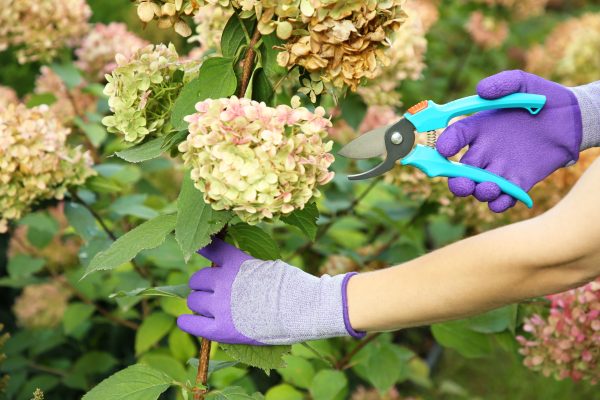
Ah, the delightful Hydrangeas, those charming shrubs that grace our gardens with their voluminous blooms in shades of pink, blue, and white. As the seasons change, so do the needs of our beloved plants, and the end of July brings forth a critical time for the care of these floral beauties. Let’s dive into the world of Hydrangeas and explore the art of deadheading, pruning, and feeding to keep them looking their best.
Special Thanks to Mary for sending in a picture of her stunning Hydrangeas!
First off, let’s talk about the macril, a term of endearment for the macrophylla, or bigleaf hydrangeas, that are so synonymous with the classic hydrangea look. These stunners (as shown above in Mary’s landscape) are the ones that often cause a stir with their bluish hues or vibrant pinks. You see, the color of their flowers is quite the chameleon, influenced by the soil’s pH levels. A secret gardeners’ trick is to use aluminum sulfate to coax out those deep blues, as it acidifies the soil, making the flowers pop with color.
Now, onto the matter at hand: deadheading.
This is the process of removing those spent flowers that have begun to fade, to make way for new, vibrant blossoms. It’s like giving your plant a little makeover, ensuring that it doesn’t get bogged down by the past, allowing it to focus on the present and future. With the macrophyllas, it’s essential to do this after their first bloom cycle, which typically happens around this time of year.
But how do you deadhead without causing harm? Well, it’s all about understanding the difference between old wood and new wood as Hydrangeas can bloom on both.
“OLD WOOD” is the growth that over winters and remains on the plant before “NEW WOOD” grows in Spring & Summer.
The time to Prune is after they Bloom! That also is rule of thumb for most flowering plants! Pinch or snip just below the first bud you see, and voilà! You’ve made room for the next round of blooms without damaging the plant. But remember, not all hydrangeas are the same. Some, like the paniculata types, bloom on new wood, so the pruning rules differ. These are the ones that are strutting their stuff right now with those gorgeous white cones that blush pink or red as the season progresses. For these, you can trim a bit more aggressively without the fear of cutting off future blooms.
And let’s not forget the feeding! Hydrangeas are known to be a bit of a diva when it comes to nutrients. To keep them happy and healthy, treat them to an acidic water-soluble fertilizer like Espoma’s Hollytone. This will give them the nutrients they crave without burning their delicate leaves or flowers. For those blues, stick with the aluminum sulfate to keep the pH levels low, and for pinks, you’ll want to use a fertilizer that doesn’t contain it.
Watering is another key element. These shrubs prefer deep, thorough watering sessions rather than frequent, shallow sips. The index finger probe is your friend here; stick it into the soil, and if it comes out dry, it’s time to give your hydrangeas a good soaking. Water deeply, allowing the soil to absorb the moisture, and then check back in a few days. If it’s dry again, it’s time for another drink. Hydrangeas love to stay hydrated; Water thoroughly and less frequently as this encourages the roots to grow strong and supports the plant’s overall health. Plus, it reduces the risk of those pesky fungal issues that can arise from surface watering.
So, there you have it, a quick rundown on the end of July to-do list for your hydrangeas. Keep them looking fabulous by deadheading, pruning, and feeding, and enjoy their floral splendor all summer long. And remember, a little TLC goes a long way in keeping your garden looking like a page out of a magazine. Happy gardening!
Check Out This Clip From Bloomers in the Radio | Podcast
All about Keeping Your Hydrangeas Happy and Healthy!
Be Sure to Hit That Subscribe Button and Stay in the Loop: